magine a factory where every machine is working perfectly. The orders are coming in, the staff know exactly what they are doing, and customers are receiving their products on time.
Then one unexpected event brings everything to a halt.
Suddenly, the problem is no longer just a damaged machine. It is delayed orders, disappointed customers, lost income and a reputation that took years to build.
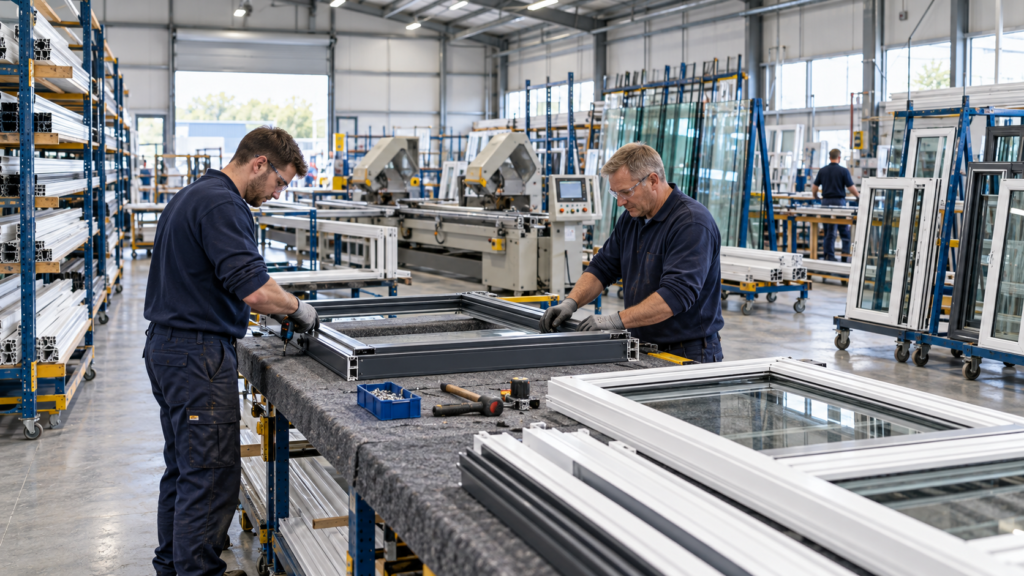
Modern British Window fabrication
This is why window and door manufacturer insurance deserves more thought than simply protecting the equipment on your factory floor.
For manufacturers, the real value of insurance lies in protecting the business that sits behind the machinery: the relationships, commitments and confidence that keep it moving.
At Cornerstone Insurance, we understand that specialist manufacturing businesses face risks that require a considered approach.
Why Is Window and Door Manufacturing Insurance Different?
Making windows and doors involves much more than assembling frames and fitting glass. It can involve expensive machinery, specialist materials, technical specifications, transportation and installation.
Each stage creates its own potential problems.
A damaged cutting machine might interrupt production. A faulty product could lead to a liability claim. Damaged goods in transit could delay an entire project.
Individually, these events may seem manageable. Together, they show why a standard approach to business insurance may not reflect the full picture.
The important question is not simply what could go wrong. It is what would happen to your business if it did.
Specialist insurance can help address the risks associated with your operations. Depending on your circumstances, suitable cover may include:
-
Public and product liability insurance
-
Employers’ liability insurance
-
Buildings, machinery and stock insurance
-
Goods in transit insurance
-
Contract works insurance
-
Professional indemnity insurance
-
Business interruption insurance
The right combination depends on what you manufacture, who you supply and whether you also install or maintain windows and doors.
The Hidden Cost of a Manufacturing Problem
Most businesses can put a price on a machine. It is much harder to calculate the value of a customer who has lost confidence.
Consider a manufacturer whose machinery is damaged by an insured event. The immediate expense may be the cost of repair or replacement.
However, there may also be unfinished orders, missed delivery dates and additional costs while production resumes.
This is where business interruption insurance may be worth considering. Subject to the policy terms, it can help protect against certain financial losses following insured damage.
It is also worth remembering that insurance policies do not cover every possible interruption. Understanding the triggers, exclusions and indemnity period is essential.
The broader lesson is simple: protecting physical assets matters, but protecting the ability to trade matters too.
What Insurance Does a Window and Door Manufacturer Need?
There is no universal insurance package for every manufacturer. A small workshop producing bespoke wooden frames has different exposures from a large factory supplying commercial glazing projects.
Nevertheless, several types of cover are worth discussing with your broker.
1. Public and Product Liability Insurance
A product does not stop creating risk when it leaves the factory.
A window or door could be damaged during installation, or a defect could result in injury or damage to property. A customer may then seek compensation.
Public liability insurance can cover certain claims involving third-party injury or property damage. Product liability insurance addresses eligible claims arising from products supplied or manufactured by your business.
The distinction matters because manufacturing creates risks that can emerge long after the production process has finished.
Always check the policy wording to understand what is covered.
2. Employers’ Liability Insurance
Your employees help turn raw materials into finished products. Protecting them is both a practical responsibility and, in most cases, a legal requirement.
In the UK, employers’ liability insurance is generally compulsory for businesses employing staff, subject to limited exemptions.
Manufacturing environments can involve heavy materials, glass handling, cutting equipment and repetitive tasks. Appropriate cover helps protect against eligible employee injury or illness claims.
Good risk management remains essential, however. Insurance should complement safe working practices rather than replace them.
3. Buildings, Machinery and Stock Insurance
A manufacturing business depends on the assets that make production possible.
Buildings, cutting equipment, assembly machinery, raw materials and finished goods can represent a substantial investment. Damage to any of them could affect your ability to fulfil orders.
Buildings and contents insurance can provide protection against specified insured events, depending on the policy.
When reviewing your cover, consider the realistic cost of replacing equipment and stock. Underestimating those values can leave a business exposed when it needs support most.
4. Goods in Transit Insurance
Windows and doors are not always easy to transport. Glass can break, frames can be damaged and bespoke products may be difficult to replace quickly.
Goods in transit insurance can protect covered goods while they are being transported, subject to the policy terms and limits.
This is particularly relevant if your business delivers directly to customers, contractors or building sites.
Check whether your arrangements cover your own vehicles, third-party carriers and the full value of the products being transported.
5. Contract Works Insurance
Some manufacturers also undertake installation projects.
In these circumstances, materials and work in progress may be exposed to risks before a job is completed. Contract works insurance can cover specified work against insured damage, depending on the policy.
For businesses that manufacture and install, it is important to understand where one stage of responsibility ends and another begins.
That way, you can identify potential gaps between manufacturing, delivery and installation cover.
6. Professional Indemnity Insurance
Some businesses do more than manufacture standard products. They may also provide technical specifications, bespoke designs or professional advice.
If a client alleges that incorrect advice or a design error caused financial loss, professional indemnity insurance may provide protection for covered claims.
It is worth considering if your business takes responsibility for technical decisions rather than simply manufacturing to a customer’s specification.
7. Business Interruption Insurance
Here is a useful way to think about business interruption cover: replacing a damaged asset does not necessarily replace the income that asset would have generated.
Even after repairs begin, production may take time to return to normal. Meanwhile, rent, wages and other expenses may continue.
Business interruption insurance can help with certain losses following insured damage, in accordance with the policy conditions.
When assessing your needs, consider how long it might take to repair equipment, source specialist components and restore normal production.
How Much Window and Door Manufacturer Insurance Do You Need?
The answer depends on the business you have built.
Your insurance requirements may be influenced by:
-
Annual turnover and the number of employees.
-
The value of your premises, machinery and stock.
-
The materials and products you manufacture.
-
Your contracts and customer requirements.
-
Whether you transport or install products.
-
The potential cost of a liability claim.
-
The financial impact of production stopping.
It is also worth reviewing your insurance whenever your business changes.
A new production line, a larger contract or an expansion into installation work can introduce risks that were not present when your policy was arranged.
The cheapest policy is not necessarily the most economical choice if it leaves important exposures uninsured. Equally, paying for cover that does not reflect your operations may not represent good value.
The objective is to find protection that makes sense for your business, rather than buying insurance simply to tick a box.
What Should You Do When Something Goes Wrong?
When an incident occurs, the first priority is to make the situation safe and limit further damage where possible.
You should then follow your insurer’s claims procedure and notify your insurer or broker within the required timeframe.
To support the process:
-
Record what happened, including the date and circumstances.
-
Take photographs where it is safe and appropriate.
-
Keep relevant invoices, receipts and supporting documents.
-
Retain damaged goods or equipment where instructed.
-
Follow your insurer’s guidance and provide requested information.
A clear record of events can help the insurer assess the circumstances of a claim.
Remember that notification deadlines, evidence requirements and other conditions vary between policies.
Why Choose Cornerstone Insurance?
Insurance is often discussed in terms of policies, premiums and sums insured. Those details matter, but they are only part of the conversation.
The more useful starting point is understanding how your business actually works.
What would cause the greatest disruption? Which assets would be difficult to replace? What obligations do you have to customers? And which risks could threaten your ability to keep trading?
At Cornerstone Insurance, we can discuss your business activities and help you explore insurance options suited to your requirements.
Whether you manufacture windows and doors, supply finished products or undertake installation work, reviewing your risks can help you make more informed decisions about your cover.
Protect Your Business Beyond the Factory Floor
Successful manufacturing depends on consistency. Customers expect quality products, reliable deliveries and commitments that are kept.
Insurance cannot prevent every problem. However, appropriate cover can help your business manage the financial consequences of certain unexpected events.
The real question is not whether your machinery is insured. It is whether your insurance reflects the business that depends on it.
Contact Cornerstone Insurance to discuss window and door manufacturer insurance and explore cover that reflects your operations, assets and business risks.
The right protection starts with understanding what you have built — and what it would take to keep it running.
All insurance cover is subject to the insurer’s terms, conditions, limits and exclusions. The suitability and availability of cover depend on your individual circumstances.