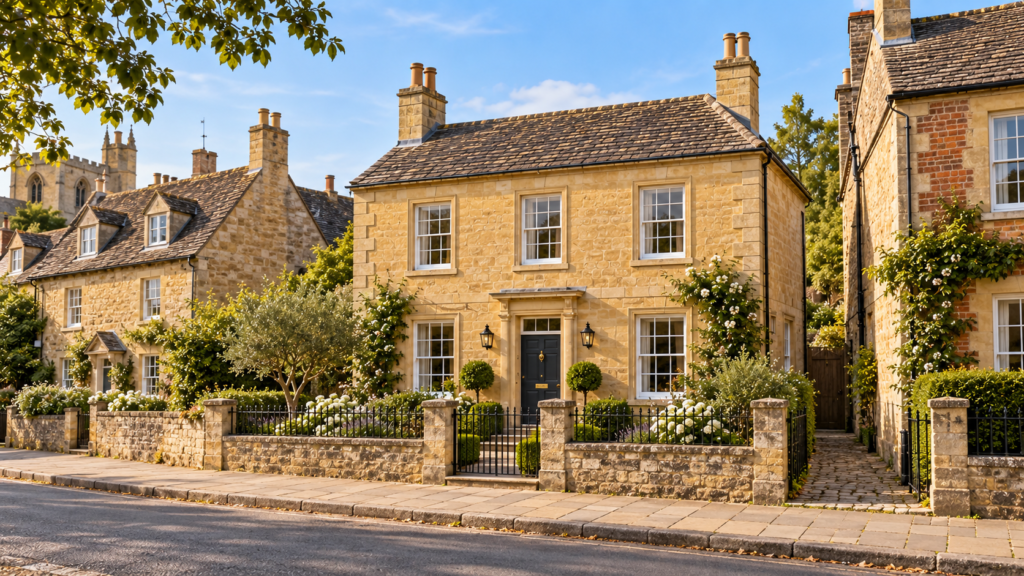
There is a peculiar problem with owning an old building.
The very things that make it desirable are often the things that make it expensive to insure.
A wall made from local stone, held together with lime mortar, may be far more interesting than one made from modern brick and cement. An oak frame may have survived several centuries of British weather, political upheaval and questionable interior decoration. A roof of handmade tiles may possess a character that no modern substitute can quite reproduce.
Unfortunately, none of these features makes repairing the building particularly straightforward.
If disaster strikes, you cannot necessarily send a builder to the nearest merchants, buy whatever is on special offer and get the place back to normal by Friday. You may need specialist materials, specialist craftspeople, professional advice and permission from the local authority before work can begin.
This creates an interesting paradox: the more irreplaceable your property appears, the more important it becomes to establish what it would actually cost to replace it.
That is the central challenge of listed building insurance in the UK. And it is why choosing a policy by comparing premiums alone is a little like choosing a surgeon by asking who charges the least per hour.
The price matters. But it is not the whole story.
What does being listed actually mean?
A building is listed because of its special architectural or historic interest. In England and Wales, listed buildings fall into Grades I, II* and II. Scotland uses Categories A, B and C, while Northern Ireland has its own grading system.
Most listed homes in England are Grade II.
One common misconception is that listing simply protects the attractive bits visible from the street. In reality, protection normally extends to the building’s interior as well as its exterior, and can include certain structures within its curtilage, such as walls, barns and outbuildings.
This matters because an ordinary house and a listed house operate under different rules when something needs changing.
With a modern property, replacing a window may be little more complicated than finding one that fits. With a listed property, replacing an original window with a modern equivalent might damage the very character the building is protected for. Work affecting that character will generally require listed building consent.
Unauthorised alterations can constitute a criminal offence.
For insurers, this creates a complication that is easy to overlook. Repairing a listed building is not simply a matter of restoring its previous physical condition. It may involve restoring it in a legally acceptable way.
A policy that pays for a replacement window is of limited use if the replacement it will fund is not one you are permitted to install.
The distinction is between repairing a building and reinstating a building. For a listed property, those are not always the same thing.
Rebuild cost: why the wrong number can be dangerously reassuring
Ask someone what their house is worth and they will usually give you a figure based on what they paid for it, what a neighbour’s house sold for or what they imagine a buyer might offer.
Ask an insurer what a house is worth and the relevant question is different.
What would it cost to rebuild the property from scratch?
Market value and rebuild cost are not interchangeable. A property in a desirable location might sell for a fortune but be relatively inexpensive to reconstruct. An old building in a less fashionable location might have a modest market value and a surprisingly large reinstatement bill.
Listed buildings make this distinction especially important.
Rebuilding may require traditional lime plaster instead of modern gypsum plaster, oak rather than softwood, reclaimed or carefully matched brick and stone, and windows made to the original design. It may also require specialist tradespeople whose skills are uncommon and whose time is correspondingly expensive.
A standard cost-per-square-metre calculator can be a useful starting point. But it is rather like estimating the cost of a meal by weighing the ingredients without knowing whether you are cooking a sandwich or a twelve-course banquet.
The measurements may be accurate. The assumptions may not be.
The problem with being underinsured
The financial consequences can be particularly unpleasant because of a policy condition commonly known as average.
Where average applies, a claim can be reduced if the property is insured for less than its true rebuild cost.
Imagine that a listed property would cost £1 million to reinstate, but the buildings sum insured is only £600,000. The property is insured for 60% of its actual rebuild cost.
If a covered incident causes £100,000 of damage, the insurer could apply that same 60% proportion and pay only £60,000, subject to the policy terms.
The owner has not merely saved money on the premium. They have inadvertently purchased less protection than they thought they had.
This is one of the stranger features of insurance: the financial consequences of getting the number wrong may remain invisible for years. Everything appears fine until the one occasion when the number matters.
The sensible approach is to commission a reinstatement cost assessment from a chartered surveyor experienced in conservation or listed buildings. The assessment should account for demolition, site clearance, professional fees and relevant statutory requirements, as well as the actual rebuilding work.
Online tools, including those available through the Building Cost Information Service, can provide a useful cross-check. They should not be treated as a substitute for understanding the building itself.
And because specialist labour and materials can become more expensive over time, the valuation should be reviewed every few years, or sooner after significant alterations.
The risks insurers care about — and why age is only part of the story
It is tempting to think that insurers dislike old buildings because they are old. The reality is more nuanced.
What matters is not simply the building’s age, but how its construction, condition, use and surroundings affect the likelihood and cost of a claim.
Fire and thatched roofs
Fire is a significant concern in older buildings. Timber frames, roof voids and limited fire compartmentation can allow flames to spread quickly.
Thatched roofs add another layer of complexity. Not every insurer will cover them, and those that do may ask detailed questions about chimney and flue maintenance, electrical installations and fire protection in the roof space.
This is a useful reminder that insurance is not a universal product. Two buildings that look broadly similar to a passer-by can represent very different risks to an underwriter.
The lesson is not to assume that your property is uninsurable. It is to find an insurer whose appetite and policy conditions fit the property you actually own.
Escape of water, flooding and subsidence
Water has an extraordinary ability to turn a small fault into an expensive project.
A leaking pipe in a modern house can be disruptive enough. In an older property, water damage may affect historic plasterwork, timber, decorative features and materials that cannot simply be replaced with off-the-shelf alternatives.
Flooding and subsidence present similar challenges. Older foundations, traditional construction and the absence of modern damp-proofing can make investigation and repair more complicated.
Insurers may therefore ask about previous claims, flood history, ground movement and remedial work.
Modernising plumbing, heating and electrical systems can help reduce certain risks, provided the work is properly carried out and any necessary consents have been obtained.
The important point is that an old building need not be an inherently bad risk. Its condition and management may matter just as much as its age.
Unoccupied properties: when doing nothing becomes a risk
An empty building can look perfectly safe. Nobody is cooking, nobody is lighting a fire and nobody is leaving a tap running.
Yet an absence of activity can create its own problems.
A small leak can continue unnoticed. A minor defect can become major damage. A property undergoing renovation may be more vulnerable than one occupied every day.
Many policies restrict cover after a specified period of unoccupancy, commonly 30 or 60 consecutive days. Some may exclude particular losses, such as theft, malicious damage or escape of water, unless specified precautions are taken.
The exact restrictions depend on the policy.
This matters to landlords between tenancies, owners undertaking renovations and people who use their properties seasonally.
Tell your insurer before the property becomes unoccupied. Insurance is an arrangement based on shared information, not a game in which you hope the other party never discovers what has changed.
Renovation: the danger of improving your property
Renovating a listed building is often an act of care. You are investing in its future, preserving its character and making it fit for modern life.
From an insurance perspective, however, renovation can temporarily make the property more vulnerable.
Hot works can cause fires. An open roof can admit rain. Contractors can accidentally damage historic fabric. And the usual buildings policy may not be designed to cover a substantial construction project.
Depending on the work, separate contract works cover or appropriate contractors’ liability arrangements may be needed.
Before starting a significant project, speak to your insurer. It is considerably easier to arrange suitable cover before the roof comes off than to explain afterwards why the building was in a condition the insurer had never been told about.
What should a good listed building insurance policy cover?
Insurance policies are often compared as if they were supermarket products: same category, different price, so choose the cheapest.
That approach becomes less useful when the products contain different definitions, exclusions and conditions.
For listed buildings, the wording deserves particular attention.
Look for cover that addresses:
-
Full reinstatement costs. The sum insured should reflect the cost of rebuilding with appropriate traditional materials and methods.
-
Statutory requirements. Check whether additional costs arising from relevant legal requirements and listed building consent are covered.
-
Professional fees. Architects, surveyors, engineers and other specialists may be essential to the repair.
-
Demolition and site clearance. These can be substantial costs following serious damage.
-
Outbuildings and boundary structures. Walls, gates, barns and other structures should be considered rather than assumed to be included.
-
Alternative accommodation or loss of income. Homeowners may need somewhere to live during repairs; landlords and businesses may need protection against lost rent or trading income.
-
Clear policy conditions. Pay attention to requirements concerning unoccupancy, heating, security, thatch and fire precautions.
The details of the cover matter as much as the headline premium.
Contents also deserve careful consideration. Some period features, such as fitted panelling and staircases, form part of the building and should be reflected in the buildings sum insured. Antiques, artwork and collections may require separate valuations and specialist contents cover.
The objective is not to insure everything at any price. It is to understand what you own, what it would cost to reinstate and which financial risks the policy actually transfers.
Listed buildings that are businesses or rental properties
Not every listed building is a family home.
Across Leicester, Leicestershire and the wider East Midlands, listed properties may operate as pubs, hotels, offices, workshops, holiday lets or converted mills. Some are rented to tenants; others combine residential and commercial use.
Here, the insurance question becomes more complicated because the building is not just somewhere to live. It may also be an income-producing asset.
Owners may need buildings insurance, property owners’ or public liability cover, and protection against loss of rent or business interruption, depending on the property’s use and circumstances.
Lease terms also matter. The owner, tenant and managing agent may have different responsibilities for repairs, maintenance and insurance.
A policy designed for a private residence may not be appropriate for a building being used commercially. Tell your broker how the property is actually occupied and used, rather than relying on the category it happened to fall into when you first bought it.
Our property owners insurance page explains how Cornerstone approaches landlord and commercial property risks, including those that standard insurers may be reluctant to accept.
Four mistakes that can cost listed property owners money
Most insurance problems do not begin with an exotic loophole. They begin with an assumption that seems perfectly reasonable.
1. Insuring the sale price instead of the rebuild cost.
The amount a buyer might pay for your property tells you very little about the cost of reconstructing it. Use a suitable reinstatement valuation.
2. Failing to disclose important details.
Listed status, a thatched roof, alterations, commercial use and periods of unoccupancy can all affect underwriting. Consumers must take reasonable care not to misrepresent relevant information; business customers have duties to make a fair presentation of the risk under the Insurance Act 2015. Depending on the circumstances, inaccurate disclosure can affect a claim.
3. Carrying out alterations without consent.
Replacing original windows, removing a chimney breast or altering a staircase without the required consent can create legal problems that insurance does not resolve. A policy should not be assumed to fund the reinstatement of unauthorised alterations simply because they were present before a claim.
4. Assuming yesterday’s valuation is still correct.
Specialist materials and skilled labour do not necessarily rise in line with general inflation. A valuation that was adequate five years ago may now be insufficient.
The common thread is simple: the risk often lies not in the fact that the building is unusual, but in assuming that an ordinary approach will be sufficient.
How Cornerstone helps with listed building insurance
A listed property deserves more than a postcode and a premium.
As an independent insurance broker based in Leicester, Cornerstone can look across the market for insurers willing to consider listed and older buildings, help you establish a realistic rebuild figure and explain the policy conditions before you commit.
That means looking beyond the obvious questions. How is the building constructed? Is the roof thatched? Is it occupied all year? Are alterations planned? Does it generate rental income? What would reinstatement involve if a serious claim occurred?
These details help determine whether a policy is genuinely suitable, rather than merely inexpensive.
And if something goes wrong, having an account handler who stays involved through the claim can make a meaningful difference, particularly when repairs require specialist tradespeople, professional reports and consent applications.
You can read more about our approach on our total customer care page.
Frequently asked questions
Is listed building insurance more expensive?
Often, yes. Traditional materials, specialist labour and conservation requirements can increase reinstatement costs. But the premium alone does not tell you whether a policy offers good value. Compare the sum insured, exclusions, conditions and extent of cover as well.
Do I need to tell my insurer that my property is listed?
Yes. Disclose the property’s listed status when obtaining a quote and at renewal. Insurers differ in their appetite for listed buildings, and some will apply specific terms or decline the risk.
Does insurance pay for listed building consent?
Not automatically. Check whether the policy covers relevant statutory compliance costs and professional fees associated with reinstatement following an insured event.
Can a thatched listed building be insured?
Yes, subject to finding an insurer willing to cover the particular property. The choice of insurers may be narrower and the conditions more demanding. Details of the thatch, chimney maintenance, electrical installation and fire precautions will be important.
What if I run a business from my listed home?
Tell your insurer. A holiday let, workshop or business premises may change the nature of the risk and require different cover.
Get a listed building insurance quote
Owning a listed building is an unusual privilege. You are not simply maintaining a house; you are looking after something that may have taken centuries to acquire its character.
The insurance should reflect that reality.
The cheapest policy may turn out to be excellent value. Or it may be cheap for a reason that becomes apparent only when you need it.
The sensible starting point is to understand your property’s rebuild cost, disclose how it is constructed and used, and make sure the policy is designed for the building you actually own.
If you own or let a listed property in Leicester, Leicestershire or elsewhere in the East Midlands, contact Cornerstone for a no-obligation review of your existing cover, reinstatement figure and policy conditions.
Because when it comes to listed buildings, the most expensive insurance mistake may be believing that you have bought more protection than you really have.
Request a listed building insurance quote or contact Cornerstone to discuss your property.